want to be a part of E. Salvador’s creative team? check out his patreon.

Script Type: 10-minute play
What Lies in the Fire is a sharp, comedic eco‑theater play set in the aftermath of a massive wildfire. Two firefighters navigate the scorched landscape, searching for signs of life while wrestling with their own assumptions about land, responsibility, and the nature of disaster. Blending humor, tension, and unexpected moments of insight, the play asks what it means to survive, to rebuild, and how the land itself might protect us — and our future.
Synopsis:
Two firefighters scan a recently burned landscape, searching for signs of life while trading jokes, frustrations, and uneasy truths. Their conversation — sometimes funny, mostly awkward — reveals the different ways people understand their roles and responsibilities to the environment. When they stumble upon an unexpected discovery, the moment reframes everything they thought they knew about renewal — and how life finds a way.
Additionals:
- Production Notes
- Director’s Notes
- Dramaturgical Notes
Setting:
- A recently burned forest — the aftermath of a massive wildfire
- Present day — grounded in a contemporary moment shaped by climate events
- Outdoor environment — open space, charred trees, ash, and silence
Themes:
- Environmental responsibility
- Humor in discomfort
- Renewal after destruction
- Human assumptions about nature
- Life’s persistence
Cast of Characters: 3 Any Gender
Billie – 30 to 40 year-old – Any Race/Any Gender: An old timey firefighter who is opinionated, stubborn and obstinate. Billie is taking Alex, the rookie, out for their first in the field outing.
Alex – 20 to 24 year-old – A Native American/Any Gender: A rookie firefighter out on their first assignment. Alex is respectful, understanding, and educated. Alex puts up with Billie’s ideas because they are used to hearing similar rhetoric.
The Presenter – Any Age – Any Race/Any Gender: An individual 100 years in the future presenting to an audience. This person is the representation of the future the production team wants to display.
Inspiration:
After fire, the first life to return is often the smallest and most overlooked. This play grew from that truth — a reminder that renewal begins quietly, and that the land teaches us how to survive if we’re willing to listen.
2 Page Excerpt:
The full script can be downloaded on E. Salvador’s New Play Exchange Profile.
Two firefighters enter from stage left. They are wearing masks and talking through intercoms. BILLIE an older, experienced fighter is taking ALEX on their first assignment. They are walking through a burnt out region of forest in California.
BILLIE:
How you doin’, Rookie? You breathin’ ok in dat ting?
ALEX:
Yes sir (or ma’am if BILLIE is a woman), Billie. I’m doing fine. I didn’t realize how claustrophobic these suits can be.
BILLIE:
Yeah, but it’s a good ting we gots them on. These Joshua Trees put off some real toxic fumes when they burn. I know they’re protected and such, but why them tree huggers in the city so upset? Burn the toxic trees and get them out of our lives, I say.
ALEX:
Um … I don’t think that’s right. They’re not trees. They’re large yucca plants. And they’re not toxic. What I know is they been used by Native Americans for all sorts of things. Food. Medicine. Shampoo.
BILLIE:
(uninterested)
Heh … They got their name from some Mormon guy. After he move out here with his wives he sees this here tree pointin’ up to the sky, like some old dude from the Bible.
ALEX:
Joshua?
BILLIE:
You’re probably right. So … if it weren’t for them Mormons we never would’ve had these “Joshua Trees.” And without these trees we wouldn’t have had these fires. And without these fires we wouldn’t be walkin’ around here like idiots. Damn, Mormons.
ALEX:
Um … these trees have been here for centuries. People only started calling them Joshua Trees in the 1880s … long after the Mormons settled around here.
BILLIE:
That’s right. These damn Mormons. Knockin’ at my door when I’m in the middle of dinner. Tryin’ to make me change my mind about religion.
page 1
BILLIE (CONT’D):
I believe in G’ damn God and Jesus. Catholic, like the rest of ‘merica. Not these specialty religions that pop up. G’ damn Catholic. But we shouldn’t talk about this.
ALEX:
Why not?
BILLIE:
Not supposed to talk about Religion and politics. That’s what my pappy told me and what my mama used to say. Never discuss religion or politics. Too contra-ver-see-al.
ALEX:
Sounds like smart people.
BILLIE:
Yessir. When people can’t agree on religion or politics you need to shut them up right then and there. Don’t need no one trying to tell me what is right and wrong. Take these fires we fightin’. All this stuff could have been prevented.
ALEX:
Really? How?
BILLIE:
Well … the chief said he was lookin’ for a way to stop wildfires in California.
ALEX:
(puzzled)
He was?
BILLIE:
Yup. Told me he done did some research on dat interweb thing about injuns up in Oregon. They completely restored the forest up there because of some injun witchcraft.
ALEX:
I believe it was Native American rituals and wisdom.
BILLIE:
That’s right injun witchcraft. These here injuns ….
ALEX:
Native Americans.
page 2
Production Notes
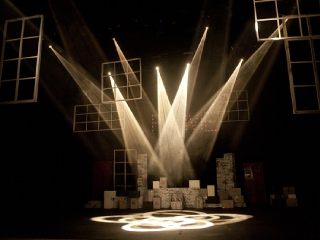
What Lies in the Fire is a two‑actor, ten‑minute play set in the present day, unfolding in the aftermath of a massive wildfire. An award‑winning short play, it was selected as one of three winners of the 2022 Bard University Climate Teach‑In Play Festival and later received Best Play at the 2023 AIHEC Conference. The tone blends humor, awkwardness, and reflection, allowing the piece to move quickly between comedic banter and moments of quiet insight. Written in a contemporary, naturalistic style with space for heightened emotional beats, the play is adaptable for a wide range of short‑play festivals, climate‑focused programming, and educational settings. Its compact structure and minimal requirements make it easy to stage while still offering depth, character contrast, and thematic resonance.
Director’s Notes

What Lies in the Fire is a play about perspective — specifically, the human arrogance that assumes our understanding is always superior. Billy begins the story with an unexamined certainty about the world. Their humor is casually “politically incorrect,” not out of malice, but because they’ve never been asked to question the impact of their words. They speak without filtering, especially around people they don’t respect. Their worldview has taught them that their perspective is the norm and that other ways of seeing matter less than their own.
Alex stands in contrast. They trust that life knows how to survive on its own terms. They sense more, see more, and carry a quiet conviction that the land is a living presence with its own rhythms and ways of healing. Alex avoids confrontation, maintaining peace with individuals like Billy who refuse to see what’s right in front of them. Their restraint is its own kind of performance.
The turning point is the discovery of the mushroom. Billy doesn’t believe they’ll find anything alive; Alex does. When Alex is proven right — when life appears in a form humble enough to be overlooked — Billy’s certainty fractures. It’s not a transformation, but it is the beginning of respect. Billy listens for the first time, not fully or cleanly, but genuinely. Their shift mirrors a broader cultural pattern: dominant worldviews adopting pieces of Indigenous knowledge without fully embracing the relational understanding behind them.
The burned forest is the silent third character. It has already adapted, already begun to renew itself, already found a way forward without human permission. The mushroom becomes a symbol of humble survival — a reminder that what saves us is often simple, overlooked, and dismissed by those who assume complexity equals superiority.
The reveal that the audience is watching a presentation in the future reframes the entire play. These are not two people in a parallel timeline; they are ancestors whose choices, blind spots, and moments of clarity shaped the world the audience now inhabits. The play becomes a historical record, inviting the audience to reflect on their own moment and what truths they might be overlooking right now.
For the creative team, the guiding principle is this: Treat the land as an active presence. Let the humor feel unfiltered and casually superior — the kind of offhand arrogance that time will expose as shortsighted. Keep the performances grounded and restrained. Let the discovery land as a quiet correction rather than a revelation. The fire has already happened. What matters now is how each character — and each audience member — chooses to learn from what grows in its wake.
Dramaturgical Note
What Lies in the Fire unfolds at the intersection of ecological storytelling, Indigenous relationality, and speculative futurism, operating on two timelines at once. Although Billy and Alex believe they are living in the present, the audience is positioned a century ahead, watching their encounter as a historical record. This layered temporality shapes the entire dramaturgy: the characters act in “now,” while the audience evaluates them from a future shaped by the very choices and assumptions unfolding onstage.
The core conflict of the play is not interpersonal but philosophical. Billy and Alex, written as gender‑neutral characters to allow for expansive casting possibilities, embody two contrasting worldviews. Billy represents a familiar form of human arrogance — the belief that human understanding is inherently superior, that complexity equals intelligence, and that the land is passive or depleted unless humans intervene. Their humor is casually “politically incorrect,” not as rebellion but as indifference. Billy has never been asked to examine the impact of their words, and they do not filter themselves around people they do not respect. Their worldview is unchallenged, unexamined, and assumed to be the norm, echoing the quiet confidence of dominant cultural narratives that treat their own perspective as universal.
Alex stands in deliberate contrast. They trust the land as a living relative — a being whose survival is intertwined with our own. Their understanding reflects cultures that live in relationship with the environment, not apart from it, recognizing that balance is created through reciprocity rather than dominance. Alex senses more, sees more, and carries a conviction that the forest is not empty but in the process of healing. Their restraint around Billy is its own kind of performance: a choice to maintain peace rather than ignite conflict with someone who refuses to see what is right in front of them.
The burned forest itself functions as the silent third character. It has already adapted, already begun to renew itself, already found a way forward without human permission or acknowledgment. Its presence is not metaphorical but active — a reminder that the land continues its work regardless of whether humans understand it. This is where the mushroom becomes central to the dramaturgy. Humble, easily overlooked, and often dismissed, fungi are among the first organisms to return after fire, breaking down ash, restoring nutrients, and creating the conditions for new life. The mushroom is not a symbol of hope; it is hope — the land’s quiet declaration that survival is already underway.
Billy enters the forest certain that nothing will be alive. Alex believes the opposite, trusting the land as a living relative whose renewal is already in motion. When the mushroom appears — humble, persistent, undeniable — Alex is proven right. Billy’s certainty fractures in that moment. This is not a transformation but a fissure — the first moment where certainty falters and respect begins. Billy listens for the first time, not fully or cleanly, but genuinely. This fracture mirrors a broader cultural pattern: dominant worldviews adopting pieces of Indigenous knowledge without fully embracing the relational understanding behind them. Billy begins to unlearn, but they are still far from undoing everything they have inherited.
When the timeline shifts and the audience understands they are in the future, the entire play is recontextualized. Billy and Alex are no longer contemporaries; they are ancestors. Their choices, blind spots, and moments of clarity have shaped the world the audience now inhabits. The play becomes a document of survival — a record of how humanity endured the next hundred years. This framing invites the audience to reflect on their own moment: what truths they might be overlooking, what warnings they might send back in time, and what simple, humble, easily dismissed knowledge might hold the key to survival. The play does not offer answers; it offers perspective.
Ultimately, What Lies in the Fire is a story about humility. It challenges the assumption that human complexity is superior to the intelligence of the land. It critiques the colonial mindset that dismisses traditional knowledge as outdated or irrelevant. It positions survival not as a triumph of human innovation but as a collaboration with the natural world — one that requires listening, respect, and the willingness to see value in what has been overlooked. The title itself points toward this truth: what lies in the fire is not destruction, but revelation; not emptiness, but possibility; not loss, but the subtle understanding that life will find a way.